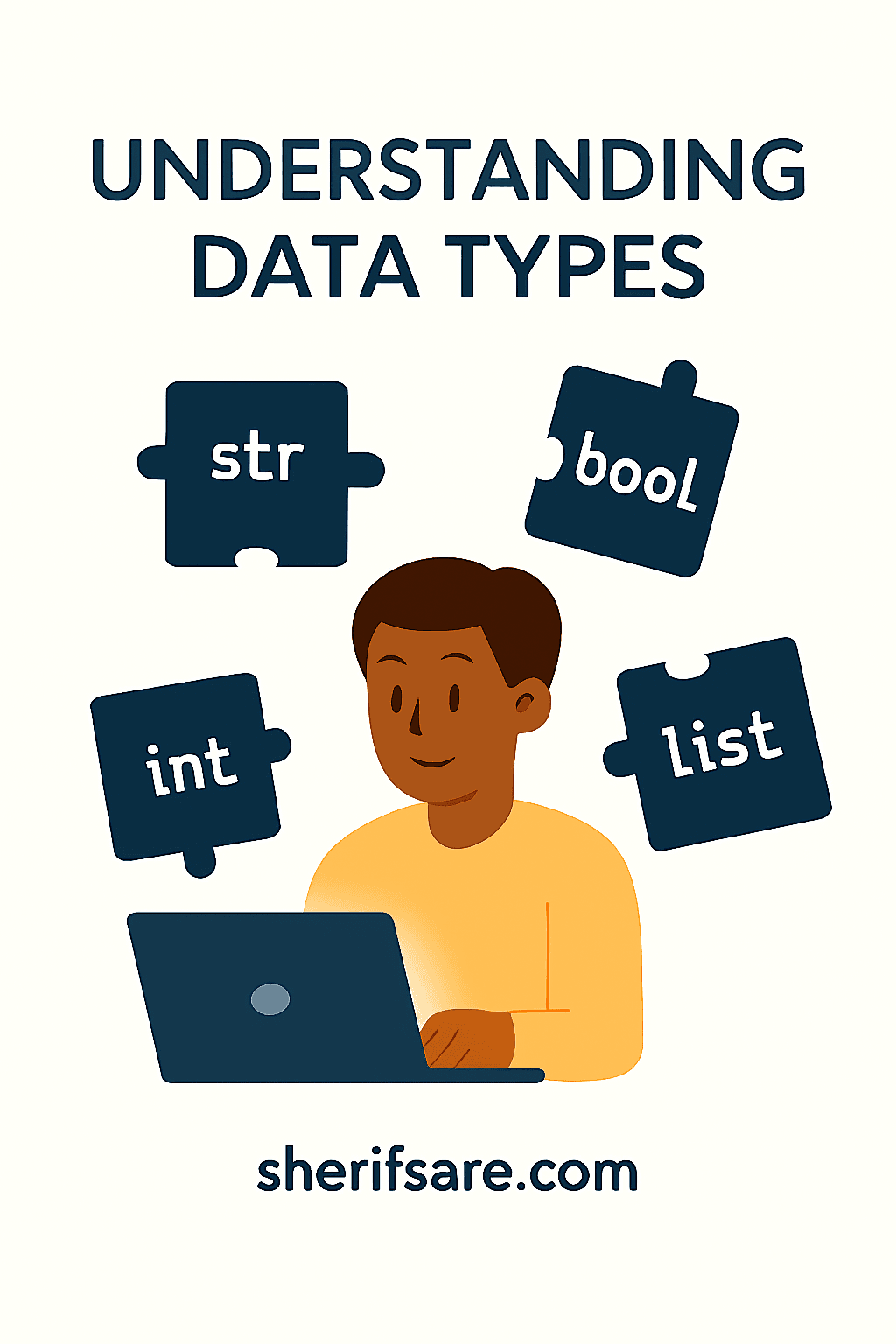
Not all data is the same.
To a computer, numbers, text, and lists are completely different things, and each has its own rules. That’s where data types come in.
What Is a Data Type?
A data type tells the computer what kind of value it’s dealing with.
Here are the most common ones in Python:
# Text
name = "YourName"        # str (string)

# Number
age = 28               # int (integer)

# Decimal
height = 1.75          # float

# True/False
is_coder = True        # bool (boolean)

# List of items
skills = ["Python", "HTML", "CSS"]  # list
Each type behaves differently, and choosing the right one helps your code work properly.
Why It Matters
- You can’t add text to a number without converting it
- Lists let you store multiple values in one place
- Booleans help with decision-making (True/False logic)
Real-Life Analogy
Think of a spreadsheet:
- Text goes in one column
- Numbers in another
- Checkboxes for True/False
- Dropdowns for lists
Each cell has a type, and so does each variable in your code.
What’s Next?
In the next post, we’ll explore if statements; how to make decisions in code using logic and conditions.