Programming Essentials

error handling and debugging

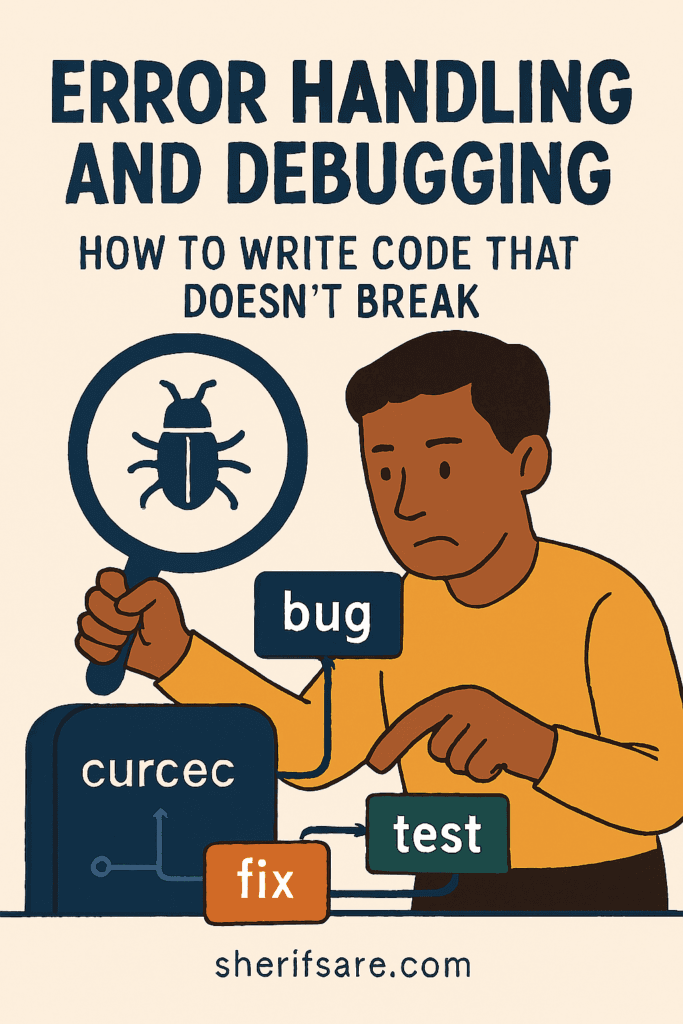
Error Handling and Debugging: Write Code That Doesn’t Break

Every programmer makes mistakes, but great programmers know how to fix them.Error handling and debugging are the skills that turn fragile code into robust systems. This post teaches how to anticipate problems, catch them gracefully, and debug with confidence. 1. What Is an Error in Programming? An error is anything that prevents your code from […]

Error Handling and Debugging: Write Code That Doesn’t Break Read More »
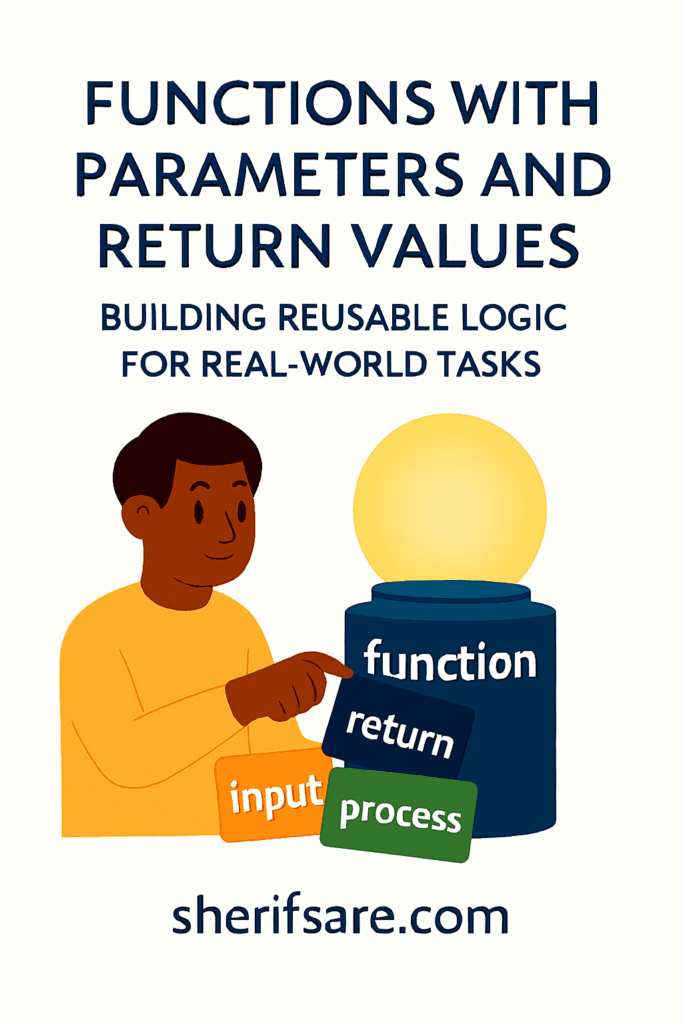
Functions with Parameters and Return Values: Reusable Logic

Functions are more than shortcuts. They’re the foundation of modular, scalable code. When you add parameters and return values, your functions become flexible tools that adapt to different inputs and deliver useful results. 1. Why Parameters and Return Values Matter Real-Life Analogy Think of a blender: 2. Defining Functions with Parameters python You can now

Functions with Parameters and Return Values: Reusable Logic Read More »

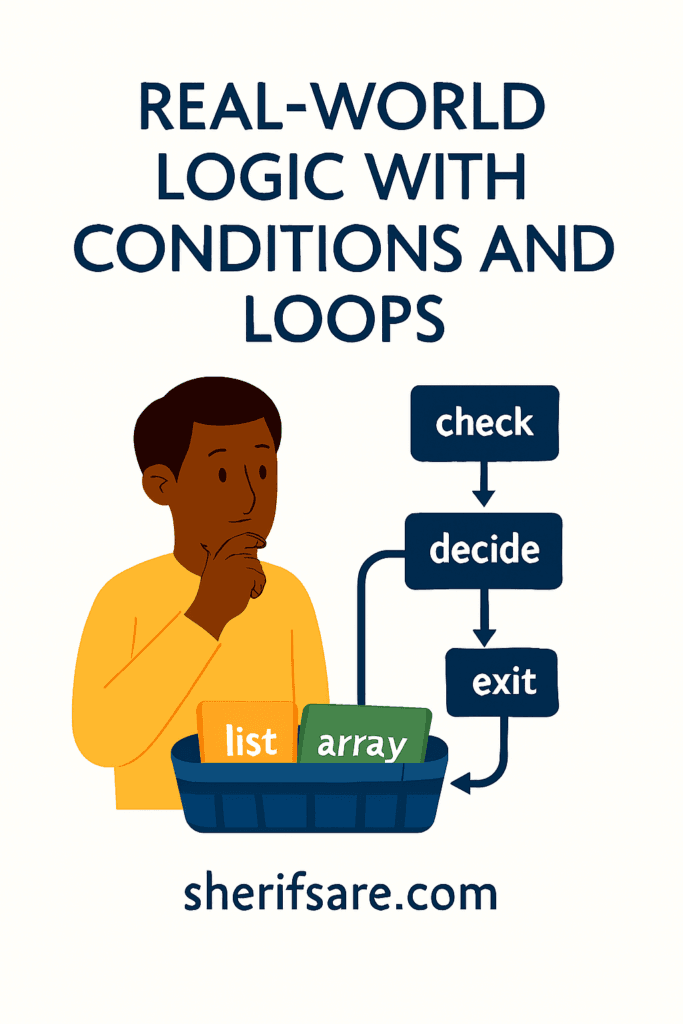
Real-World Logic with Conditions and Loops —Build Smart Code

Programming becomes powerful when your code can think and act with Conditions and Loops.By combining conditions (if, elif, else) with loops (for, while), you unlock the ability to build smart, responsive systems, from calculators to games to data processors. 1. Why Combine Conditions and Loops? Loops repeat actions.Conditions make decisions.Together, they let your code: Real-Life

Real-World Logic with Conditions and Loops —Build Smart Code Read More »

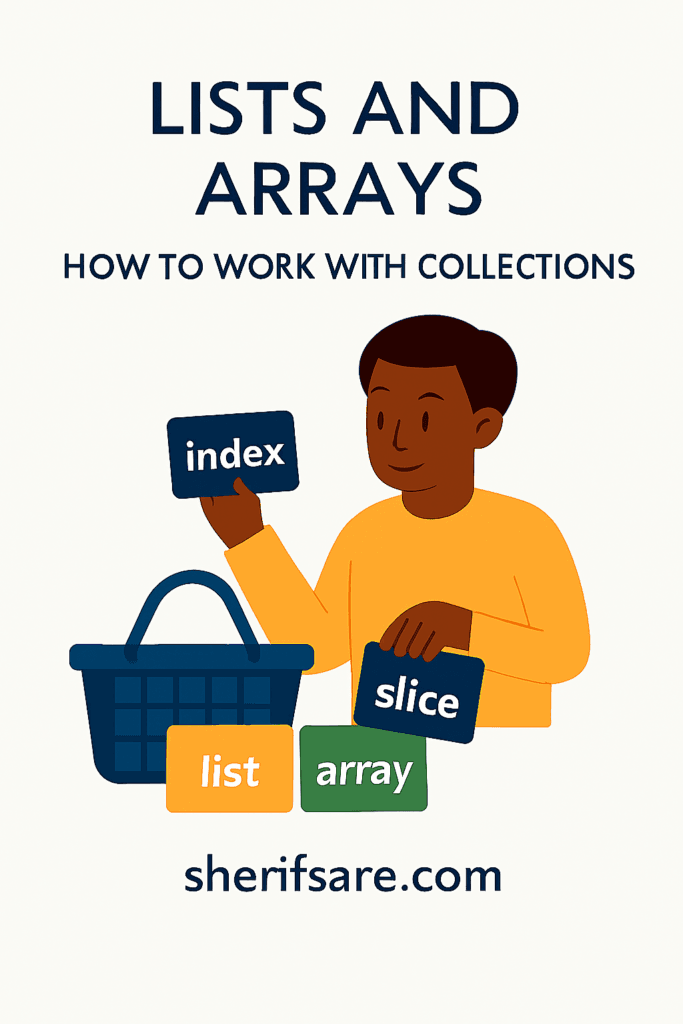
Lists and Arrays — Store and Work with Collections in Code

Programming isn’t just about single values. It’s about managing collections. Whether you’re storing names, scores, or settings, lists and arrays help you organize and manipulate multiple items efficiently. 1. What Is a List or Array in Programming? A list (in Python) or array (in many other languages) is a data structure that holds multiple values

Lists and Arrays — Store and Work with Collections in Code Read More »

Functions in Programming — How to Organize Your Code Like a Pro

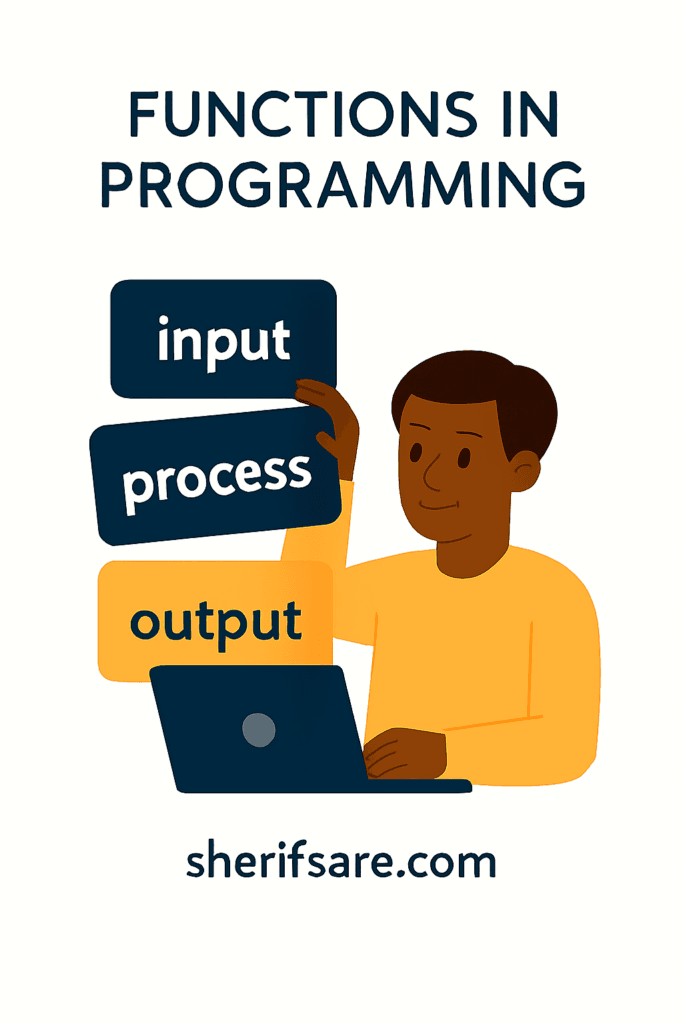
Functions in Programming — Organize Your Code Like a Pro

Functions in programming are the backbone of clean, reusable code.They let you break big problems into small, manageable pieces and give your code structure, clarity, and power. 1. What Is a Function in Programming? A function is a named block of code that performs a specific task. You define it once, and you can use

Functions in Programming — Organize Your Code Like a Pro Read More »

Mastering Loops in Programming

Mastering Loops in Programming: Automate Repetition

Mastering Loops in Programming allow you to repeat actions in code without rewriting them. This post explains how loops work, why they matter, and how to use them effectively, with detailed guidance, examples, and real-world analogies. 1. What Is a Loop in Programming? A loop is a control structure that lets you repeat a block

Mastering Loops in Programming: Automate Repetition Read More »

if statements img

If Statements: Teaching Your Code to Make Decisions

Programming isn’t just about storing data; it’s about acting on it.With if statements, your code can make decisions based on conditions. It’s how you build logic into your programs. What Is an If Statement? An if statement checks whether something is true. If it is, the code inside runs.Here’s a simple example: If the condition

If Statements: Teaching Your Code to Make Decisions Read More »

Understanding Variables img

What Are Variables in Programming? Digital Containers?

Variables are how computers remember things.They’re like labeled containers that hold information and you get to decide what goes inside. What Is a Variable? A variable is a name you assign to a value. It could be a number, a word, or even a list of things.Here’s a simple example in Python: Now the computer

What Are Variables in Programming? Digital Containers? Read More »

how to write your first line of code

Write Your First Line of Code; No Setup, No Stress

You don’t need to install anything. You don’t need to be a tech wizard.All you need is curiosity and a browser. In this post, we’ll write your very first line of code together using Python, one of the most beginner-friendly languages out there. What You’ll Do We’ll use an online Python editor so you can

Write Your First Line of Code; No Setup, No Stress Read More »

Scroll to Top