Earth Science

the rock cycle

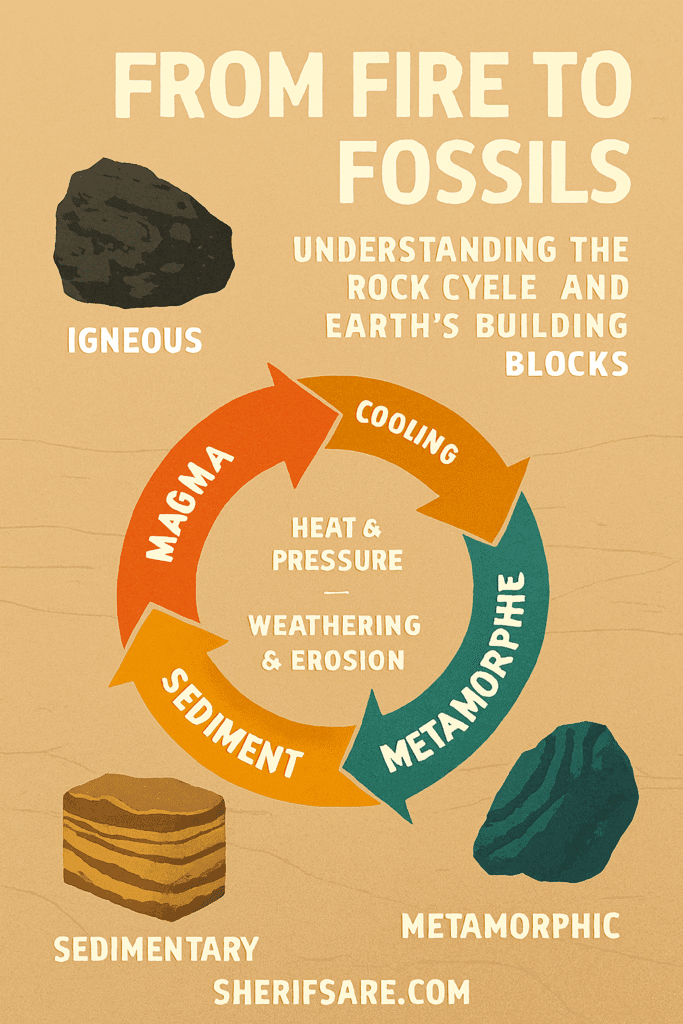
The Rock Cycle and Earth’s Recycling System

The rock cycle is Earth’s natural recycling system. It explains how rocks change from one type to another: igneous, sedimentary, and metamorphic, through processes like melting, cooling, weathering, erosion, burial, and heat/pressure. This cycle is dynamic, non-linear, and ongoing, shaping Earth’s surface and interior over millions of years. What Is the Rock Cycle? The rock […]
The Rock Cycle and Earth’s Recycling System Read More »

Metamorphic rocks

Metamorphic Rocks and Geological Transformation

Metamorphic rocks are formed when existing rocks are transformed by heat, pressure, and chemical processes without melting.They reveal Earth’s deep interior dynamics and are key to understanding mountain building, tectonics, and mineral formation. What Are Metamorphic Rocks? Metamorphic rocks originate from pre-existing rocks; either igneous, sedimentary, or older metamorphic rocks that undergo transformation due to:

Metamorphic Rocks and Geological Transformation Read More »

Sedimentary Rocks and Fossils

Sedimentary Rocks and Fossils Formation — Earth’s Archives

Sedimentary rocks are formed from particles of other rocks, minerals, and organic material that settle in layers. Fossils are preserved remains or traces of ancient life, often found within these layers. Together, Sedimentary Rocks and Fossils record Earth’s environmental history and biological evolution. What Are Sedimentary Rocks? Sedimentary rocks are one of the three main

Sedimentary Rocks and Fossils Formation — Earth’s Archives Read More »

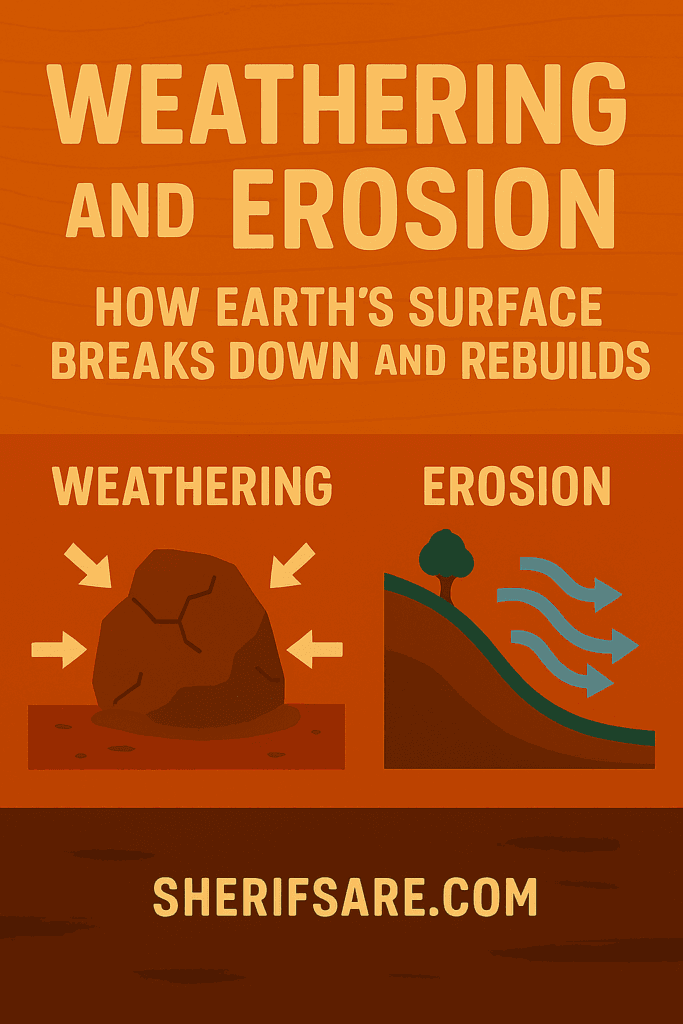
Weathering and Erosion — How Earth’s Surface Breaks Down and Rebuilds

Weathering breaks down rocks where they are.Erosion moves those broken pieces elsewhere.Together, weathering and erosion shape every landscape, from mountains to coastlines. Understanding the Difference: Weathering and Erosion These two processes are often confused, but they’re distinct: Process What It Does Where It Happens Weathering Breaks down rocks in place On the surface or underground

Weathering and Erosion — How Earth’s Surface Breaks Down and Rebuilds Read More »

Volcanoes and Mountains

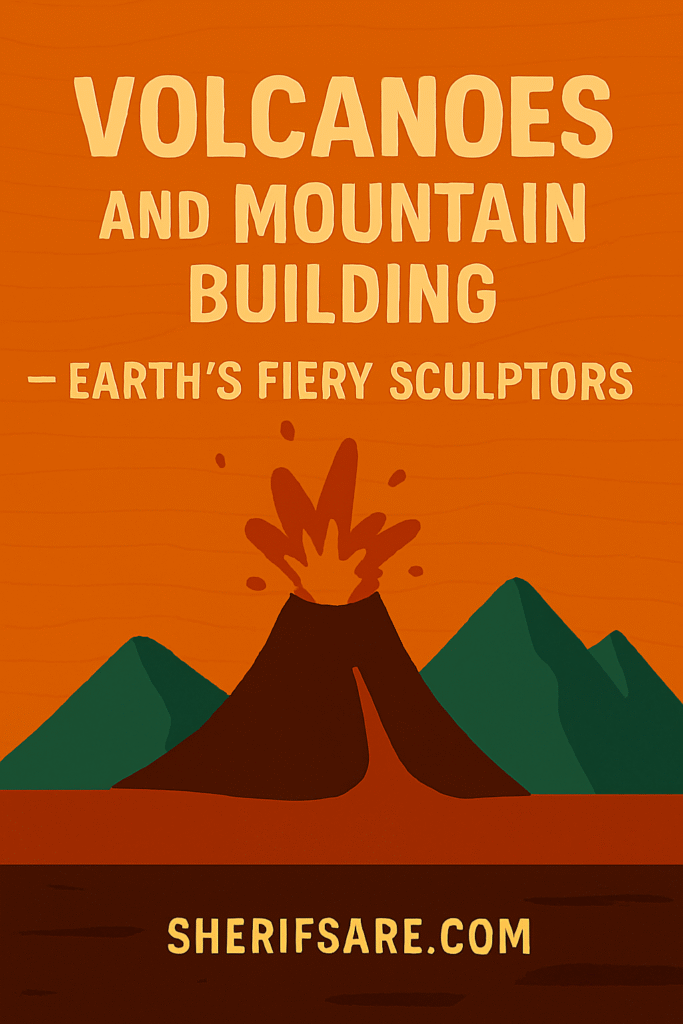
Volcanoes and Mountains Building: Earth’s Fiery Sculptors

Volcanoes and mountains aren’t just dramatic landscapes — they reveal how Earth’s crust reshapes itself. These processes: Volcanoes: Fire from Below Type Shape & Features Example Shield Broad, gentle slopes; runny lava Mauna Loa (Hawaii) Stratovolcano Steep, layered; explosive eruptions Mount Fuji, Mount St. Helens Cinder Cone Small, steep; short-lived eruptions Parícutin (Mexico) Mountain Building

Volcanoes and Mountains Building: Earth’s Fiery Sculptors Read More »

plate tectonics

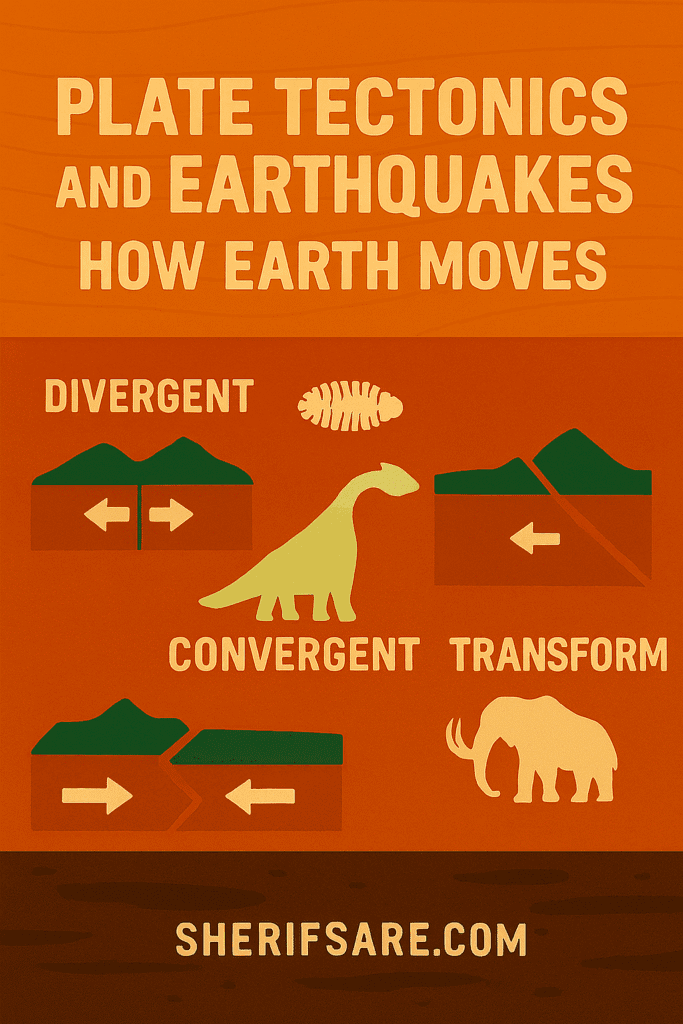
Plate Tectonics and Earthquakes: How the Earth Moves

Plate tectonics explains how Earth’s crust is broken into massive slabs (plates) that move over the mantle. This movement causes: Understanding tectonics helps us predict hazards and locate resources. The Basics of Plate Tectonics Plate Type Description Example Region Continental Thick, less dense, granitic crust African Plate Oceanic Thin, dense, basaltic crust Pacific Plate Plate

Plate Tectonics and Earthquakes: How the Earth Moves Read More »

Geologic Time

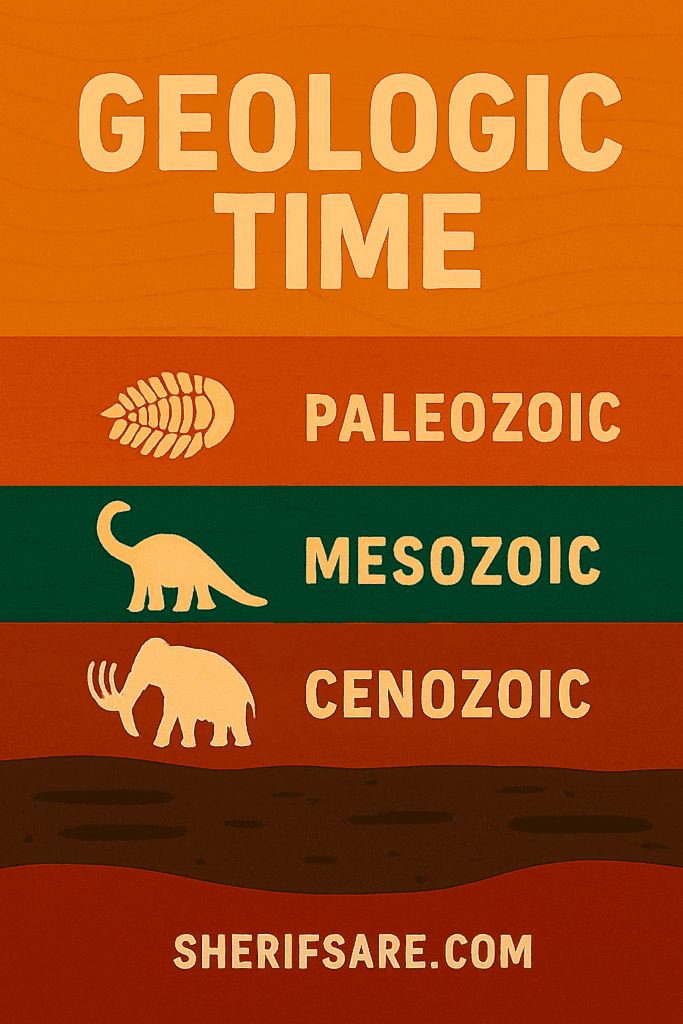
Geologic Time and Earth’s History

Why Geologic Time Matters Understanding geologic time allows us to: Earth is about 4.6 billion years old. That’s a timescale far beyond human history and geology helps us read that deep past through rocks, fossils, and layers. The Geologic Time Scale Eon Era Period Key Events Phanerozoic Cenozoic Quaternary Humans evolve, Ice Ages Paleogene Mammals

Geologic Time and Earth’s History Read More »

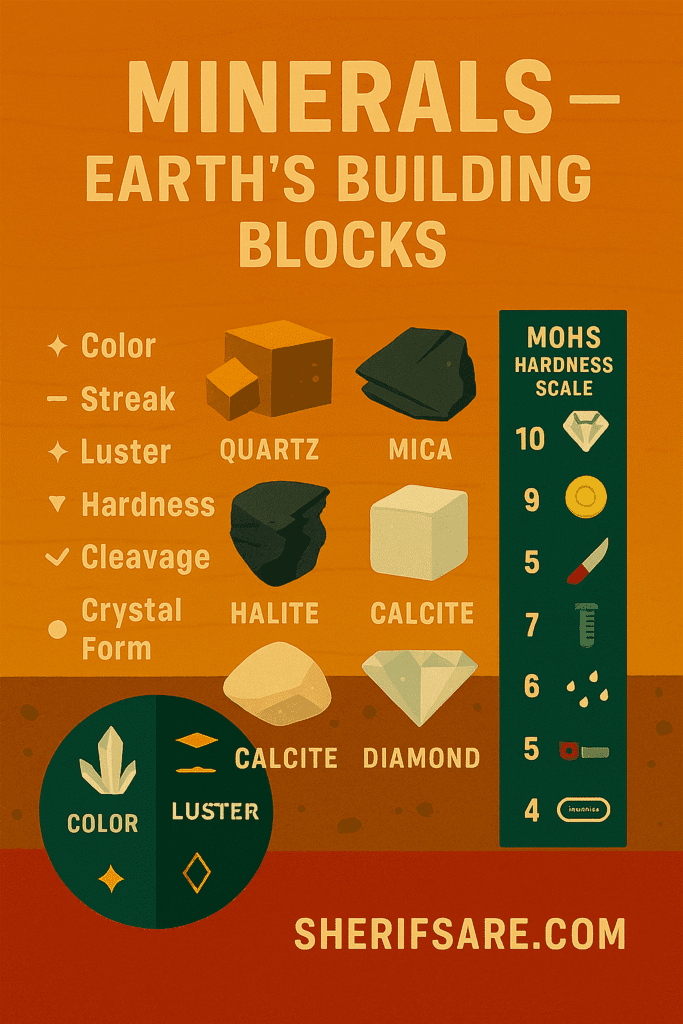
Minerals: Earth’s Building Blocks

Minerals are naturally occurring, inorganic solids with a definite chemical composition and crystal structure. They’re the ingredients that make up rocks and the key to understanding Earth’s composition. How to Identify Minerals Property What to Look For Example Minerals Color Surface appearance Quartz (clear), Pyrite (gold) Streak Color of powdered form Hematite (red streak) Luster

Minerals: Earth’s Building Blocks Read More »

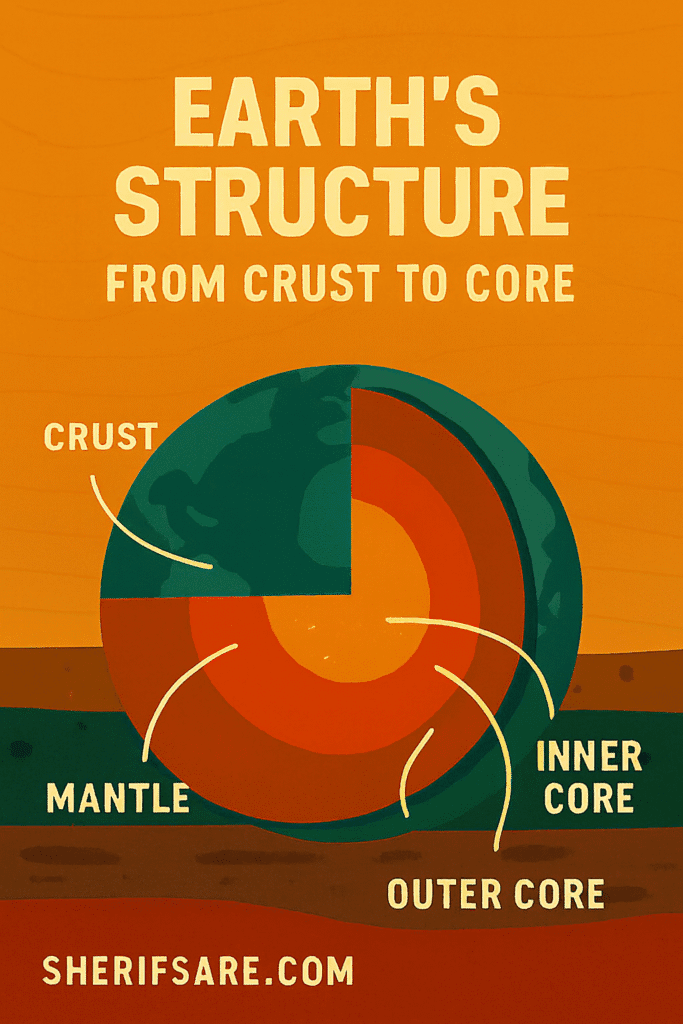
Earth’s Structure: From Crust to Core

Understanding Earth’s structure helps us explain: The Four Main Layers Layer Depth Range Composition Key Features Crust 0–70 km Solid rock (granite, basalt) Earth’s surface; where we live Mantle 70–2,900 km Silicate minerals (peridotite) Semi-solid; drives plate movement Outer Core 2,900–5,150 km Liquid iron and nickel Generates Earth’s magnetic field Inner Core 5,150–6,371 km Solid

Earth’s Structure: From Crust to Core Read More »

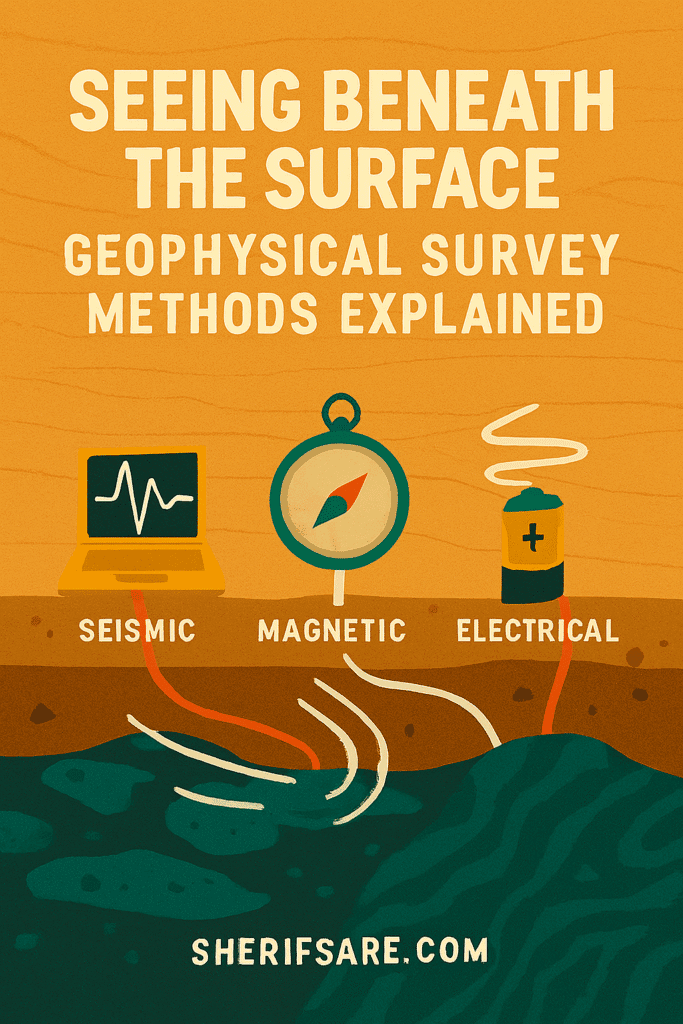
Seeing Beneath the Surface — Geophysical Survey Methods Explained

Geophysical Survey Methods Explained

Why Geophysical Surveys Matter Geophysics lets us explore what lies beneath Earth’s surface without digging. Whether you’re hunting for gold, mapping groundwater, or planning a city, geophysical methods reveal hidden layers, faults, and resources. Core Geophysical Methods Method What It Detects Best For Seismic Wave velocity through rock layers Oil & gas, fault zones, site

Geophysical Survey Methods Explained Read More »

Scroll to Top