Cloud security is the practice of safeguarding cloud-based systems, data, and infrastructure from threats and vulnerabilities. This post explores security principles, tools, strategies, and real-world applications for startups, mining operations, educational platforms, and beyond.
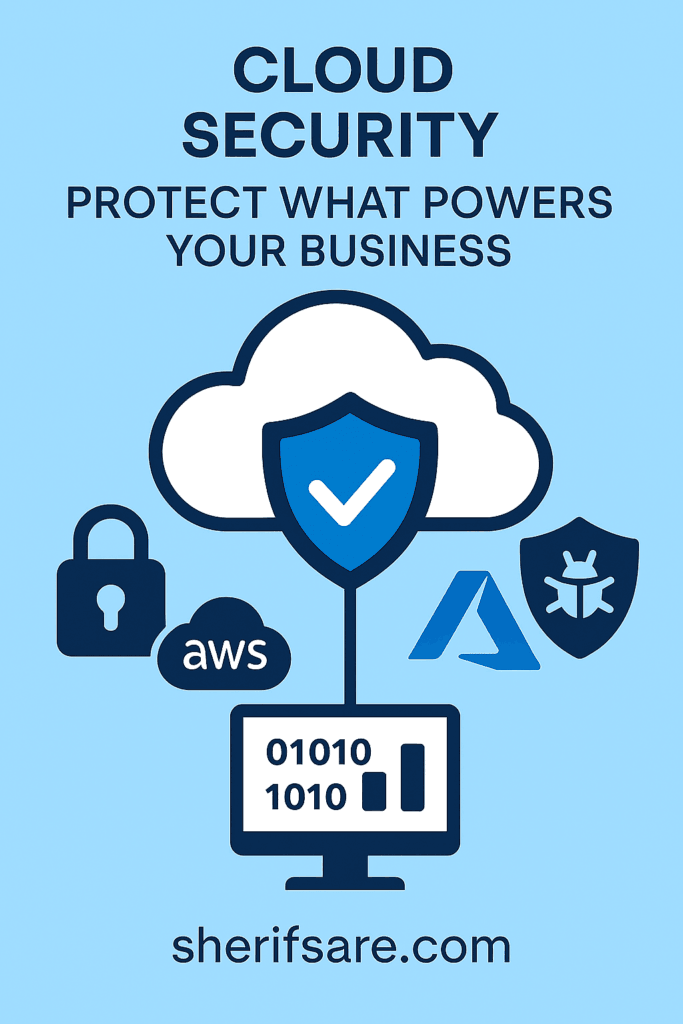
Table of Contents
- What Is Cloud Security?
- Why Cloud Security Matters
- Core Principles of Cloud Security
- Threat Landscape
- Security Strategies
- Tools and Services for Cloud Security
- Real-World Use Cases
- Best Practices
- Common Pitfalls
- Security in Mining, Education, and E-Commerce
1. What Is Cloud Security?
Cloud security refers to the technologies, policies, and controls used to protect cloud environments from unauthorized access, data breaches, and service disruptions. It spans infrastructure, applications, networks, and user identities.
Key domains:
- Identity and access management (IAM)
- Data protection and encryption
- Network security
- Threat detection and response
- Compliance and governance
2. Why Cloud Security Matters
- Data Protection: Safeguards sensitive customer and business data.
- Business Continuity: Prevents downtime and service disruption.
- Compliance: Meets regulatory requirements (e.g., GDPR, HIPAA).
- Customer Trust: Builds confidence in your platform.
- Risk Reduction: Minimizes exposure to cyber threats.
3. Core Principles of Cloud Security
🔹 Least Privilege
- Users and services get only the access they need.
🔹 Defense in Depth
- Multiple layers of security across infrastructure and applications.
🔹 Shared Responsibility Model
- Cloud provider secures infrastructure; customer secures data and access.
🔹 Zero Trust
- Never trust, always verify. Every access request is authenticated and authorized.
🔹 Continuous Monitoring
- Real-time visibility into threats and vulnerabilities.
4. Threat Landscape
- Data breaches
- Misconfigured storage buckets
- Insider threats
- DDoS attacks
- Credential theft
- API vulnerabilities
- Ransomware and malware
5. Security Strategies
🔸 Identity and Access Management
- Use IAM roles, MFA, and SSO.
🔸 Encryption
- Encrypt data at rest and in transit using AES-256 or TLS.
🔸 Network Segmentation
- Isolate workloads using VPCs, subnets, and firewalls.
🔸 Threat Detection
- Use SIEM and XDR tools to detect anomalies.
🔸 Incident Response
- Automate alerts and playbooks for rapid containment.
6. Tools and Services for Cloud Security
| Tool/Service | Function |
|---|---|
| AWS GuardDuty | Threat detection and monitoring |
| Azure Security Center | Unified security management |
| Google Chronicle | Cloud-native SIEM |
| Okta / Azure AD | Identity and access management |
| HashiCorp Vault | Secrets management |
| Prisma Cloud / Wiz | Cloud security posture management |
| CrowdStrike / SentinelOne | Endpoint protection |
| Cloudflare / AWS WAF | DDoS and web application firewall |
7. Real-World Use Cases
Fintech
- Use Vault for secrets, GuardDuty for threat detection, and Okta for IAM.
- Encrypt customer data and monitor API access.
E-Commerce
- Protect checkout flows with WAFs.
- Monitor for credential stuffing and bot attacks.
Education Platforms
- Secure student data with IAM and encryption.
- Monitor LMS access and prevent data leaks.
Mining Operations
- Protect sensor data and geospatial models.
- Monitor field access and automate incident response.
8. Best Practices
- Use MFA everywhere: Protect user and admin accounts.
- Rotate secrets and keys: Prevent long-term exposure.
- Automate security scans: Integrate into CI/CD pipelines.
- Log everything: Use centralized logging and SIEM.
- Conduct regular audits: Validate configurations and access policies.
- Train teams: Build security awareness and response readiness.
9. Common Pitfalls
- Misconfigured resources: Open S3 buckets or public VMs.
- Overprivileged roles: Excessive access permissions.
- Lack of visibility: No centralized monitoring.
- Delayed response: Manual incident handling.
Solutions:
- Use policy-as-code.
- Implement automated alerts.
- Conduct security reviews.
10. Security in Mining, Education, and E-Commerce
Mining
- Secure exploration data and access logs.
- Monitor field devices and automate alerts.
Education
- Protect student records and exam environments.
- Monitor LMS access and prevent data leaks.
E-Commerce
- Secure payment data and customer profiles.
- Monitor API traffic and prevent fraud.
Next
Cloud security is foundational. Whether you’re scaling a startup, running a mining operation, or managing an educational platform, security protects what powers your business.