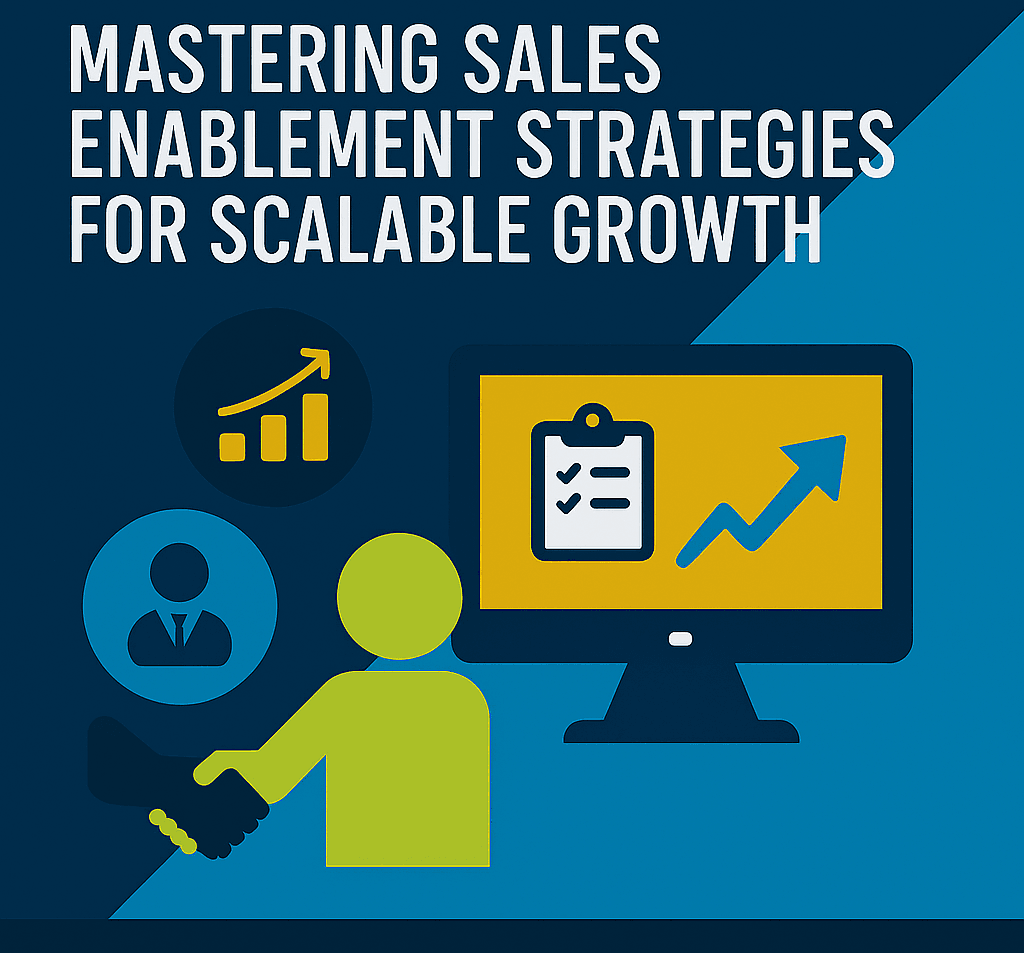
Sales enablement isn’t just about giving your team tools, it’s about aligning content, training, and technology to empower reps to close deals faster and smarter. This guide breaks down the full ecosystem of sales enablement, from foundational principles to advanced tactics, with real-world examples and actionable frameworks.
Table of Contents
- What Is Sales Enablement?
- Why Sales Enablement Matters in Business Development
- Core Components of a Sales Enablement Strategy
- Building a Sales Enablement Framework
- Tools & Technologies That Power Enablement
- Content Strategy for Sales Enablement
- Training & Coaching for Sales Teams
- Metrics That Matter: Tracking Enablement Success
- Common Pitfalls & How to Avoid Them
- Real-World Case Study
- Final Thoughts & Action Plan
1. What Is Sales Enablement?
Sales enablement is the strategic process of equipping sales teams with the resources, tools, content, and training they need to effectively engage prospects and close deals. It’s a cross-functional initiative that bridges marketing, sales, and operations.
“Sales enablement is about making your sales team smarter, faster, and more aligned with buyer needs.”
2. Why Sales Enablement Matters in Business Development
Sales enablement directly impacts:
- Conversion rates
- Sales cycle length
- Customer acquisition cost (CAC)
- Revenue per rep
In business development, it ensures that every outreach, pitch, and follow-up is backed by data, content, and confidence.
3. Core Components of a Sales Enablement Strategy
- Content: Case studies, pitch decks, product sheets, objection-handling guides
- Training: Onboarding, role-play, product deep dives
- Technology: CRM, enablement platforms, analytics
- Alignment: Sales + marketing + product working in sync
- Feedback loops: Continuous improvement based on rep input and performance data
4. Building a Sales Enablement Framework
Here’s a 5-step framework:
| Step | Description |
|---|---|
| 1. Audit | Review current tools, content, and gaps |
| 2. Align | Sync with marketing and product teams |
| 3. Equip | Provide reps with curated content and tools |
| 4. Train | Deliver ongoing coaching and certifications |
| 5. Optimize | Track KPIs and refine strategy |
5. Tools & Technologies That Power Enablement
- CRM: Salesforce, HubSpot
- Enablement Platforms: Seismic, Highspot, Showpad
- Analytics: Gong, Chorus, Klue
- Content Management: Notion, Google Drive, Airtable
Pro Tip: Choose tools that integrate seamlessly with your existing workflow.
6. Content Strategy for Sales Enablement
Your content must be:
- Buyer-centric: Address pain points, not just features
- Stage-specific: Tailored for awareness, consideration, decision
- Easy to access: Centralized and searchable
- Trackable: Know what gets used and what converts
Types of content:
- Email templates
- Product demos
- Competitive battlecards
- ROI calculators
- Customer success stories
7. Training & Coaching for Sales Teams
Training should be:
- Continuous: Not just during onboarding
- Interactive: Role-play, quizzes, peer reviews
- Data-driven: Based on performance gaps
- Personalized: Tailored to rep strengths and weaknesses
Use LMS platforms like Lessonly, Trainual, or internal portals.
8. Metrics That Matter: Tracking Enablement Success
Track KPIs like:
- Win rate
- Sales cycle length
- Content usage
- Rep ramp time
- Quota attainment
- Lead-to-opportunity conversion
Use dashboards to visualize trends and identify bottlenecks.
9. Common Pitfalls & How to Avoid Them
- Overloading reps with content → Curate, don’t dump
- Lack of feedback loops → Regular rep surveys and interviews
- Misalignment between sales and marketing → Joint planning sessions
- Ignoring analytics → Track what works and iterate
10. Real-World Case Study
A fintech startup implemented Seismic and trained reps on objection handling using real call recordings. Within 6 months:
- Win rate increased by 22%
- Sales cycle shortened by 18%
- Rep satisfaction rose by 30%
11. Final Thoughts & Action Plan
Sales enablement is a growth engine. To activate it:
- Audit your current enablement assets
- Align cross-functional teams
- Invest in scalable tools
- Train reps continuously
- Track performance and iterate
Sources: 310creative.com O8 Snov.io