Cloud monitoring is the continuous observation of cloud-based systems to ensure optimal performance, security, and cost-efficiency. This post explores monitoring strategies, tools, real-world use cases, and best practices for startups, mining operations, educational platforms, and beyond.
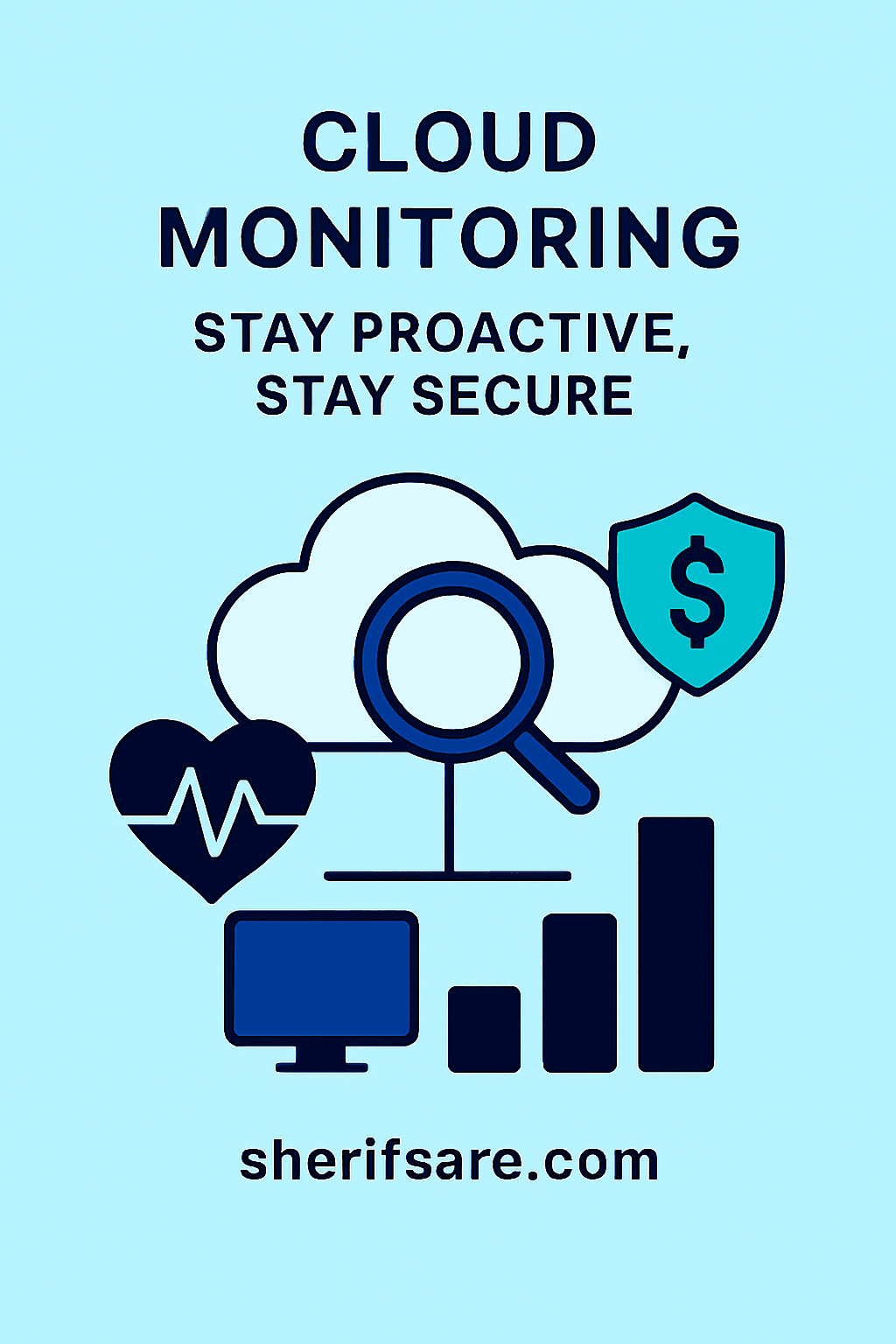
Table of Contents
- What Is Cloud Monitoring?
- Why Cloud Monitoring Matters
- Key Cloud Monitoring Metrics
- Cloud Monitoring Strategies
- Tools and Services for Cloud Monitoring
- Real-World Use Cases
- Best Practices
- Common Pitfalls
1. What Is Cloud Monitoring?
Cloud monitoring involves tracking the health, performance, and security of cloud infrastructure, applications, and services. It enables teams to detect anomalies, optimize resources, and respond to incidents in real time.
Core components:
- Infrastructure monitoring
- Application performance monitoring (APM)
- Security monitoring
- Cost monitoring
- User experience monitoring
2. Why Cloud Monitoring Matters
- Performance Assurance: Prevents downtime and latency issues.
- Security Visibility: Detects threats and vulnerabilities early.
- Cost Control: Identifies resource waste and spending anomalies.
- Compliance: Ensures adherence to regulatory standards.
- User Experience: Maintains service quality and responsiveness.
3. Key Cloud Monitoring Metrics
- CPU and memory usage
- Disk I/O and network throughput
- Latency and response time
- Error rates and exceptions
- Security events and access logs
- Billing and usage trends
4. Cloud Monitoring Strategies
🔹 Real-Time Monitoring
- Immediate visibility into system health.
- Useful for mission-critical applications.
🔹 Threshold-Based Alerts
- Trigger notifications when metrics exceed defined limits.
🔹 Anomaly Detection
- Uses machine learning to identify unusual patterns.
🔹 Synthetic Monitoring
- Simulates user interactions to test performance.
🔹 Distributed Tracing
- Tracks requests across microservices for root cause analysis.
5. Tools and Services for Cloud Monitoring
| Tool/Service | Function |
|---|---|
| AWS CloudWatch | Infrastructure and application monitoring |
| Azure Monitor | Unified monitoring for Azure services |
| Google Cloud Operations | Logging, tracing, and metrics |
| Datadog | Full-stack observability |
| New Relic | APM and infrastructure monitoring |
| Prometheus + Grafana | Open-source monitoring and visualization |
| ELK Stack | Log aggregation and analysis |
| Splunk | Security and operational intelligence |
Sources: AWS, Azure, Google Cloud, CNCF, Datadog, New Relic
6. Real-World Use Cases
Fintech
- Monitor fraud detection pipelines and transaction latency.
- Alert on suspicious access patterns.
E-Commerce
- Track checkout flow performance and cart abandonment.
- Monitor inventory sync and API response times.
Education Platforms
- Monitor LMS uptime and student access logs.
- Alert on failed content delivery or exam environments.
Mining Operations
- Monitor sensor data ingestion and geospatial processing.
- Alert on equipment anomalies and environmental thresholds.
7. Best Practices
- Define clear SLAs and SLOs: Align monitoring with business goals.
- Use dashboards and visualizations: Make data actionable.
- Implement centralized logging: Aggregate logs for analysis.
- Automate alerting and escalation: Ensure timely response.
- Secure monitoring endpoints: Protect data and access.
- Review and refine regularly: Adapt to evolving workloads.
8. Common Pitfalls
- Alert fatigue: Too many alerts lead to desensitization.
- Blind spots: Missing metrics or services.
- Poor dashboard design: Hard to interpret data.
- Lack of context: Alerts without actionable insights.
Solutions:
- Use alert grouping and suppression.
- Conduct observability audits.
- Train teams on interpreting dashboards.
Next
Cloud monitoring isn’t just about watching; it’s about acting. It empowers teams to stay proactive, secure, and cost-aware. Whether you’re scaling a startup, running a mining operation, or managing an educational platform, monitoring is your key to operational excellence.
In our next post, we’ll explore cloud compliance and how to meet regulatory standards with confidence.