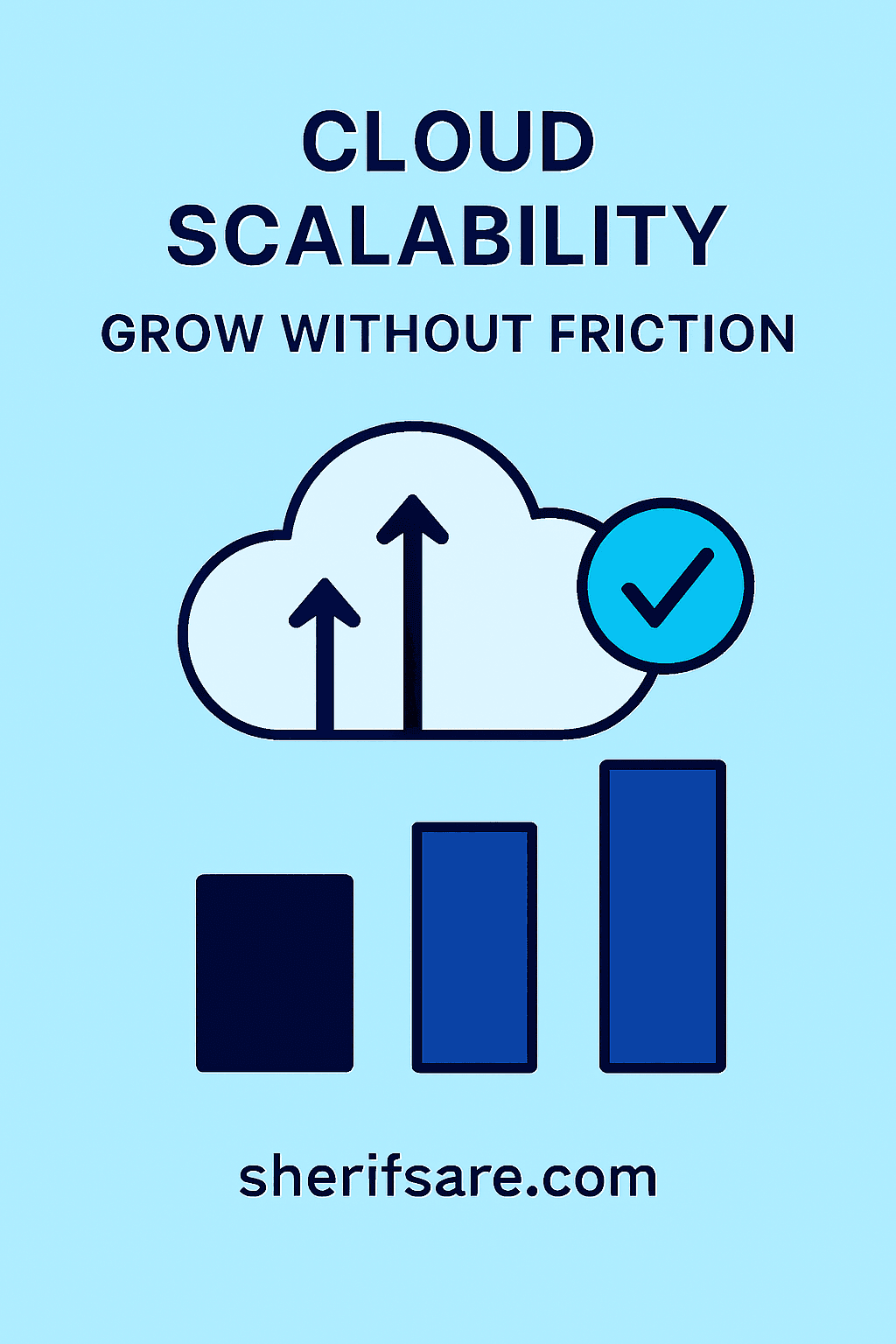
Cloud scalability is the ability to dynamically adjust computing resources to meet changing demands. This post explores the types of scalability, strategic approaches, real-world use cases, and best practices for startups, enterprises, and technical teams. It’s your ultimate guide to building resilient, cost-effective, and growth-ready cloud infrastructure.
Table of Contents
- What Is Cloud Scalability?
- Types of Cloud Scalability
- Why Scalability Matters
- Strategic Approaches to Scaling
- Real-World Use Cases
- Best Practices for Cloud Scalability
- Common Pitfalls and How to Avoid Them
- Tools and Services That Support Scalability
1. What Is Cloud Scalability?
Cloud scalability refers to the ability of a cloud system to handle increasing or decreasing workloads by provisioning or de-provisioning resources automatically or manually. It ensures that performance remains consistent even as demand fluctuates.
Key characteristics:
- Elastic resource allocation
- Performance consistency
- Cost efficiency
- Automation readiness
2. Types of Cloud Scalability
🔹 Vertical Scaling (Scale Up)
- Adds more power (CPU, RAM) to an existing server.
- Ideal for monolithic applications or databases.
🔹 Horizontal Scaling (Scale Out)
- Adds more servers or instances to distribute load.
- Best for microservices, web apps, and distributed systems.
🔹 Diagonal Scaling
- Combines vertical and horizontal scaling.
- Useful for hybrid workloads and unpredictable traffic.
3. Why Scalability Matters
- Performance: Prevents slowdowns during traffic spikes.
- Cost Control: Avoids overprovisioning and underutilization.
- Business Agility: Supports rapid growth and market responsiveness.
- User Experience: Ensures consistent service delivery.
4. Strategic Approaches to Scaling
🔸 Predictive Scaling
Uses historical data and AI to anticipate demand and scale proactively.
🔸 Reactive Scaling
Responds to real-time metrics like CPU usage or traffic volume.
🔸 Scheduled Scaling
Predefined scaling based on known patterns (e.g., peak hours).
🔸 Manual Scaling
Controlled by engineers for precision in sensitive environments.
5. Real-World Use Cases
Fintech (e.g., Revolut)
Scaled to 25M users by using horizontal scaling and container orchestration Techwave.
E-Commerce (e.g., Shopify)
Handles Black Friday surges with auto-scaling and CDN integration.
Education Platforms
Use vertical scaling for LMS databases and horizontal scaling for student portals.
6. Best Practices for Cloud Scalability
- Design for failure: Use redundancy and fault tolerance.
- Use stateless architecture: Easier to scale horizontally.
- Implement auto-scaling groups: Automate resource allocation.
- Monitor and log everything: Use tools like Prometheus, Grafana, and CloudWatch.
- Optimize storage tiers: Use S3 Intelligent-Tiering or Azure Blob lifecycle rules.
- Leverage containers and orchestration: Kubernetes, ECS, GKE.
- Use caching layers: Redis, Memcached to reduce load.
- Apply cost-aware scaling: Use budget alerts and reserved instances.
7. Common Pitfalls and How to Avoid Them
- Overprovisioning: Leads to wasted spend.
- Underprovisioning: Causes performance bottlenecks.
- Ignoring latency: Affects user experience.
- Lack of observability: Makes troubleshooting difficult.
- Poor architecture: Limits scalability options.
Solutions:
- Use cloud-native design patterns.
- Implement observability tools.
- Conduct regular scalability audits.
8. Tools and Services That Support Scalability
| Tool/Service | Function |
|---|---|
| AWS Auto Scaling | Dynamic resource allocation |
| Azure Scale Sets | VM scaling for workloads |
| Google Cloud Composer | Workflow orchestration |
| Kubernetes | Container orchestration |
| Terraform | Infrastructure as code |
| CloudWatch / Datadog | Monitoring and alerting |
| Redis / Memcached | Caching |
Sources: prosperops.com Aspire Systems Techwave
Next
Scalability isn’t just a technical feature; it’s a business enabler. Whether you’re running a startup, mining operation, or educational platform, scalable cloud architecture ensures you grow without friction, overspending, or downtime.
In our next post, we’ll explore cloud automation and how to streamline operations with minimal manual intervention.