Plate tectonics explains how Earth’s crust is broken into massive slabs (plates) that move over the mantle. This movement causes:
- Earthquakes
- Volcanoes
- Mountain building
- Ocean trench formation
Understanding tectonics helps us predict hazards and locate resources.
The Basics of Plate Tectonics
| Plate Type | Description | Example Region |
|---|---|---|
| Continental | Thick, less dense, granitic crust | African Plate |
| Oceanic | Thin, dense, basaltic crust | Pacific Plate |
Plate Boundaries
| Boundary Type | What Happens | Example |
|---|---|---|
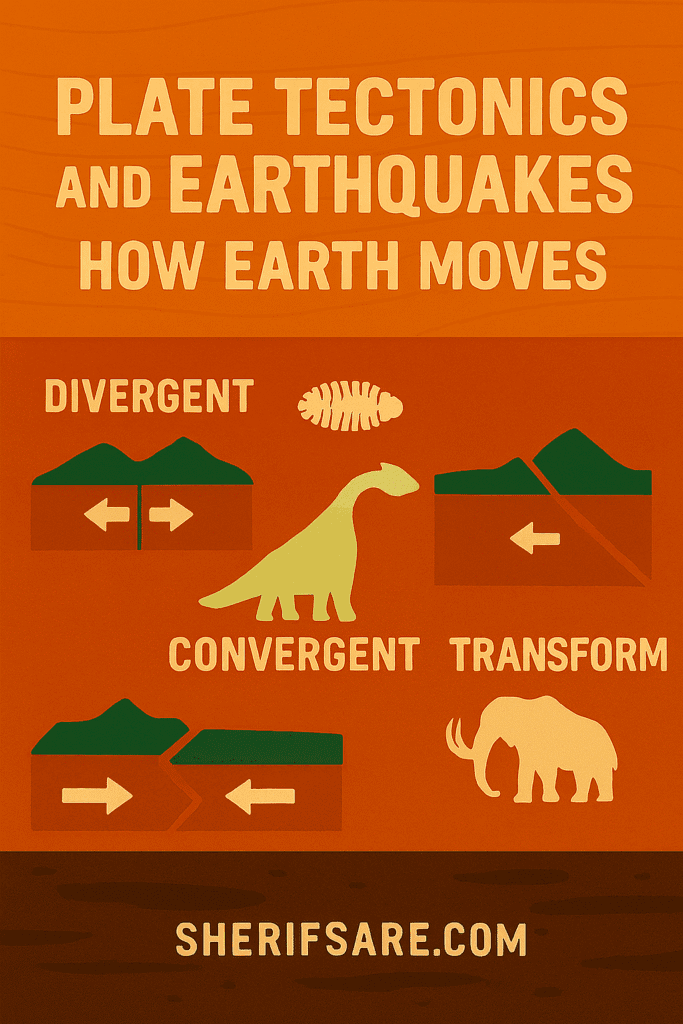
| Divergent | Plates move apart | Mid-Atlantic Ridge |
| Convergent | Plates collide | Himalayas, Andes |
| Transform | Plates slide past each other | San Andreas Fault |
Earthquakes and Faults
- Earthquakes occur when stress builds up and rocks break along faults.
- Focus: Point inside Earth where quake starts
- Epicenter: Point on surface directly above the focus
Ghana’s Tectonic Context
- Ghana lies on the stable African Plate, far from active boundaries.
- Earthquakes are rare but minor intraplate tremors have occurred, especially near Accra.
What’s Next
In the next post, we’ll explore Volcanoes and Mountain Building — how Earth’s crust reshapes itself through fire and uplift.