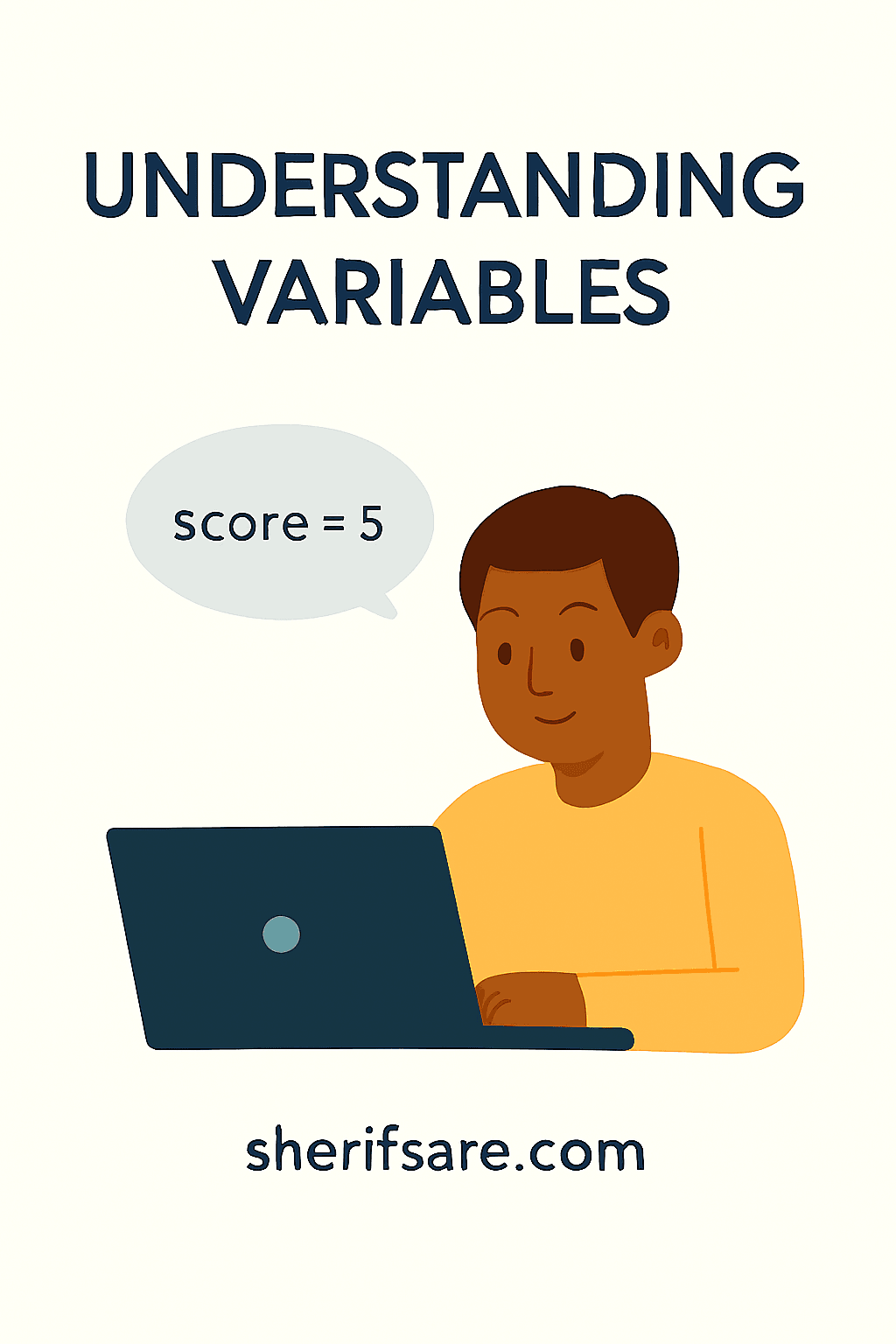
Variables are how computers remember things.
They’re like labeled containers that hold information and you get to decide what goes inside.
What Is a Variable?
A variable is a name you assign to a value. It could be a number, a word, or even a list of things.
Here’s a simple example in Python:
name = "YourName"
age = 67
Now the computer knows that name refers to "YourName" and age refers to 67.
Why Variables Matter
- They help you store and reuse information
- They make your code readable and flexible
- They’re essential for logic, automation, and decision-making
Try This
greeting = "Hello"
name = "world"
print(greeting + ", " + name + "!")
This combines two variables to create a message:
Hello, world!
Real-Life Analogy
Imagine labeling jars in your kitchen:
sugar = white crystalssalt = tiny grainstea = dried leaves
You don’t need to remember what’s inside; the label does it for you.
What’s Next?
In the next post, we’ll explore data types; the different kinds of values you can store in variables (text, numbers, lists, etc.).