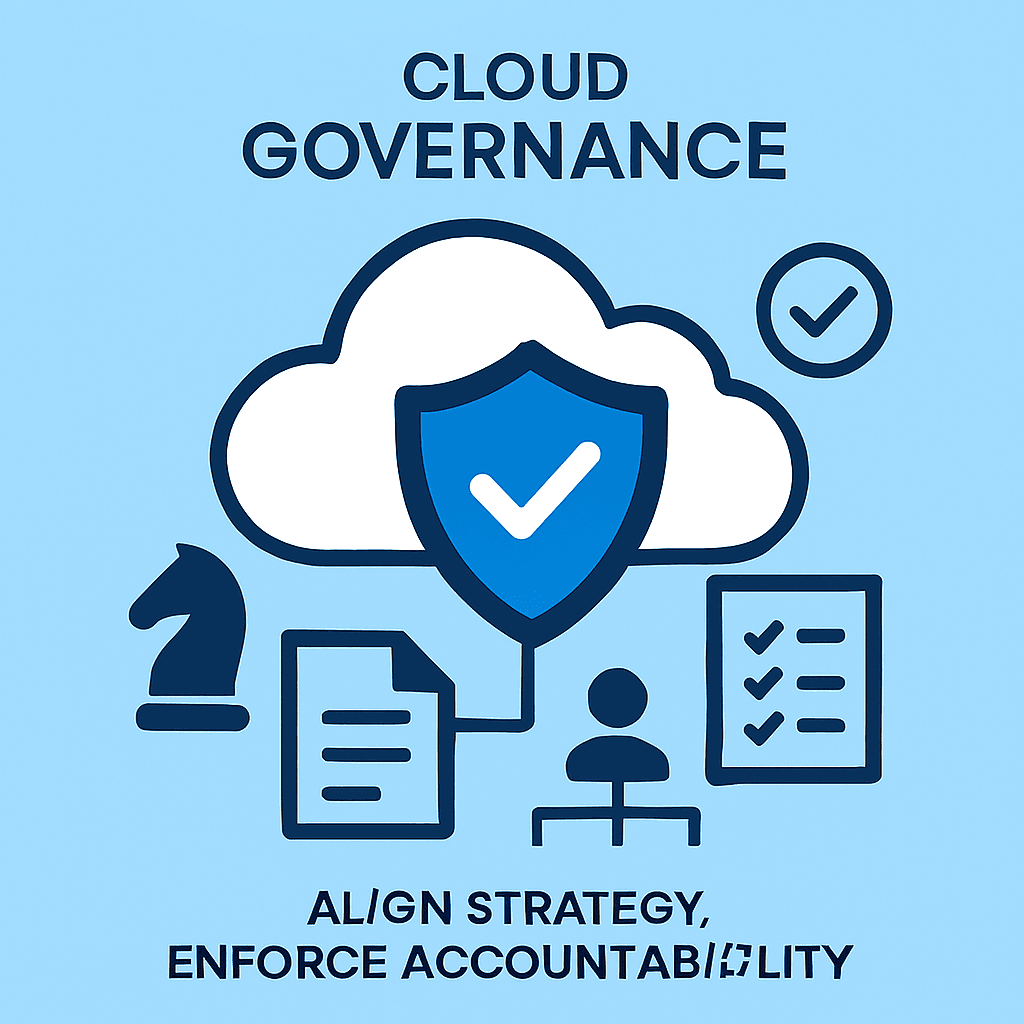
Cloud governance ensures that cloud usage aligns with business goals, security policies, and compliance requirements. This post explores governance models, tools, strategies, and real-world applications for startups, mining operations, educational platforms, and beyond.
Table of Contents
- What Is Cloud Governance?
- Why Governance Matters
- Key Pillars of Cloud Governance
- Governance Models
- Tools and Services for Cloud Governance
- Real-World Use Cases
- Best Practices
- Common Pitfalls
- Governance in Mining, Education, and E-Commerce
- Final Thought
1. What Is Cloud Governance?
Cloud governance refers to the framework of policies, roles, processes, and tools that guide cloud usage across an organization. It ensures that cloud operations are secure, compliant, cost-effective, and aligned with business objectives.
Core elements:
- Policy enforcement
- Role-based access control
- Cost management
- Compliance oversight
- Resource standardization
2. Why Governance Matters
- Strategic Alignment: Ensures cloud usage supports business goals.
- Security and Compliance: Enforces policies and protects data.
- Cost Control: Prevents overspending and resource sprawl.
- Operational Consistency: Standardizes deployments and configurations.
- Risk Mitigation: Reduces exposure to misconfigurations and shadow IT.
3. Key Pillars of Cloud Governance
🔹 Identity and Access Management (IAM)
- Define roles, permissions, and authentication methods.
🔹 Resource Consistency
- Standardize naming conventions, tagging, and configurations.
🔹 Cost Management
- Set budgets, track usage, and optimize spend.
🔹 Security and Compliance
- Enforce encryption, logging, and audit policies.
🔹 Monitoring and Reporting
- Use dashboards and alerts to track governance adherence.
4. Governance Models
🔸 Centralized Governance
- A single team manages cloud policies and controls.
- Ideal for regulated industries and large enterprises.
🔸 Decentralized Governance
- Teams manage their own cloud environments within a shared framework.
- Promotes agility and innovation.
🔸 Hybrid Governance
- Combines centralized oversight with decentralized execution.
- Balances control and flexibility.
5. Tools and Services for Cloud Governance
| Tool/Service | Function |
|---|---|
| AWS Organizations | Manage multi-account governance |
| Azure Management Groups | Hierarchical policy enforcement |
| Google Cloud Resource Manager | Organize and control resources |
| Terraform + Sentinel | Policy-as-code enforcement |
| Cloud Custodian | Automated policy enforcement |
| Vanta / Drata | Compliance automation |
| CloudCheckr / CloudHealth | Cost and governance analytics |
6. Real-World Use Cases
🏦 Fintech
- Enforce encryption and access policies across accounts.
- Monitor spend and compliance with SOC 2.
🛒 E-Commerce
- Standardize resource naming and tagging.
- Use policy-as-code to enforce API security.
🏫 Education Platforms
- Manage student data access and retention policies.
- Monitor cloud usage across departments.
⛏️ Mining Operations
- Govern geospatial data access and environmental reporting.
- Enforce role-based access for field teams.
7. Best Practices
- Define clear policies: Use templates and policy-as-code.
- Automate enforcement: Reduce manual errors.
- Use tagging standards: Track resources by project, owner, and environment.
- Conduct regular audits: Validate governance adherence.
- Train teams: Ensure understanding of governance responsibilities.
8. Common Pitfalls
- Shadow IT: Unmonitored cloud usage outside governance.
- Policy drift: Inconsistent enforcement across environments.
- Lack of visibility: Hard to track resource ownership and usage.
- Over-centralization: Slows down innovation.
Solutions:
- Use centralized dashboards.
- Implement hybrid governance.
- Promote governance awareness.
9. Governance in Mining, Education, and E-Commerce
⛏️ Mining
- Govern exploration data and reporting workflows.
- Enforce access controls for sensitive field data.
🏫 Education
- Manage cloud usage across departments.
- Enforce data retention and deletion policies.
🛒 E-Commerce
- Govern customer data access and API usage.
- Monitor spend and enforce tagging standards.
10. Final Thought
Cloud governance isn’t just about control; it’s about clarity. It empowers teams to innovate responsibly, scale securely, and stay aligned with business goals. Whether you’re running a startup, mining operation, or educational platform, governance is your foundation for sustainable cloud success.