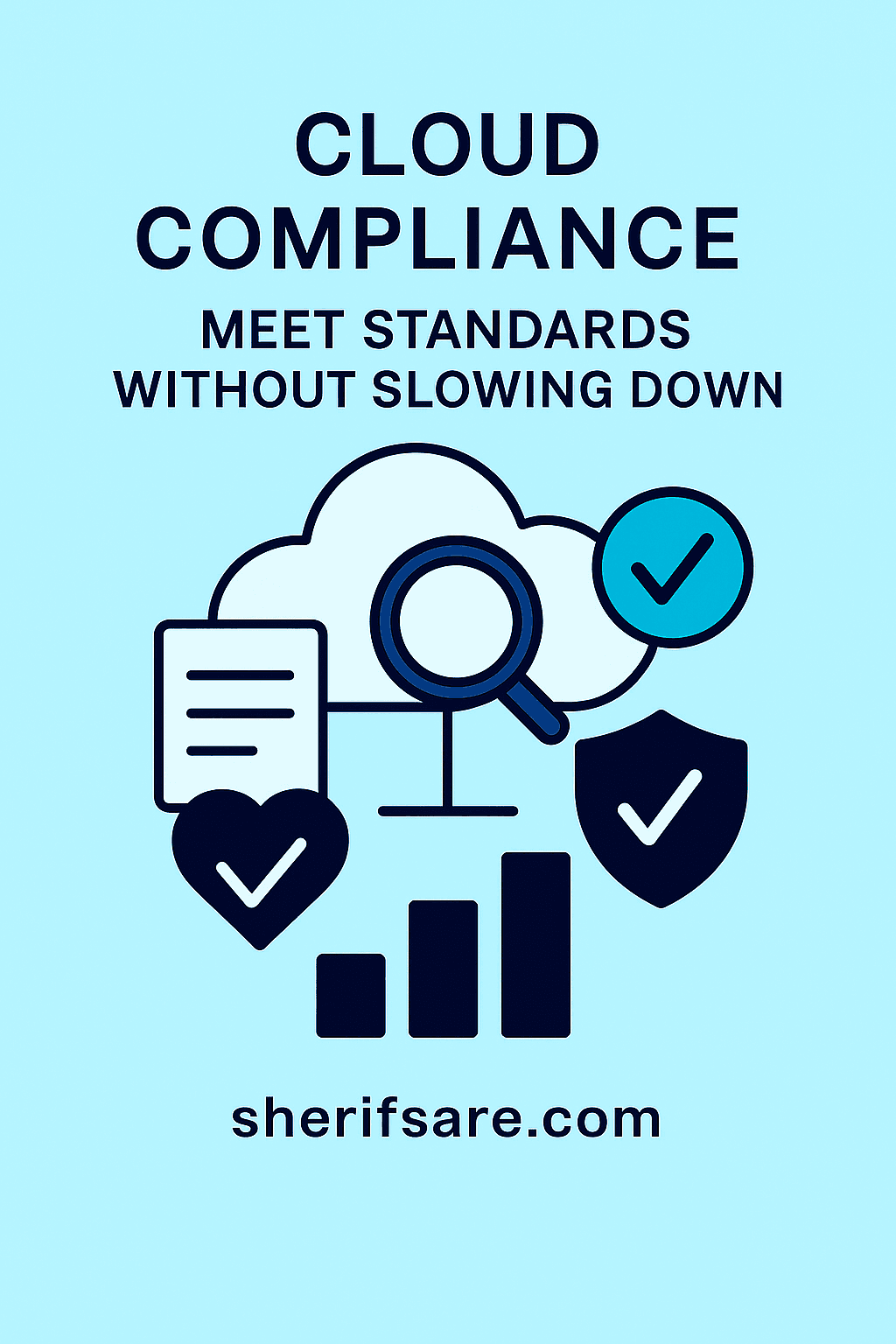
Cloud compliance ensures that your cloud operations adhere to legal, regulatory, and industry standards. This post explores compliance frameworks, strategies, tools, and real-world use cases for startups, mining operations, educational platforms, and beyond.
Table of Contents
- What Is Cloud Compliance?
- Why Compliance Matters
- Key Compliance Frameworks
- Compliance Strategies
- Tools and Services for Cloud Compliance
- Real-World Use Cases
- Best Practices
- Common Pitfalls
- Final Thought
1. What Is Cloud Compliance?
Cloud compliance refers to the process of ensuring that cloud-based systems, data, and operations meet regulatory and industry standards. It involves governance, risk management, and adherence to legal requirements across jurisdictions.
Core elements:
- Data protection
- Access control
- Audit trails
- Encryption
- Policy enforcement
2. Why Compliance Matters
- Legal Protection: Avoid fines and legal consequences.
- Customer Trust: Demonstrates commitment to data privacy and security.
- Market Access: Enables operation in regulated industries and regions.
- Operational Integrity: Aligns cloud practices with business goals.
3. Key Compliance Frameworks
| Framework | Focus Area |
|---|---|
| GDPR | Data protection (EU) |
| HIPAA | Healthcare data (US) |
| PCI-DSS | Payment card security |
| ISO/IEC 27001 | Information security management |
| SOC 2 | Service organization controls |
| NIST | Cybersecurity standards (US) |
| FISMA | Federal information systems (US) |
| Ghana Data Protection Act | Personal data governance (Ghana) |
Sources: EU Commission, NIST, ISO, Ghana DPC
4. Compliance Strategies
🔹 Data Classification
- Identify sensitive data and apply appropriate controls.
🔹 Role-Based Access Control (RBAC)
- Limit access based on user roles and responsibilities.
🔹 Encryption at Rest and in Transit
- Protect data from unauthorized access.
🔹 Continuous Auditing
- Monitor logs, access patterns, and configuration changes.
🔹 Policy Automation
- Use tools to enforce compliance policies automatically.
5. Tools and Services for Cloud Compliance
| Tool/Service | Function |
|---|---|
| AWS Artifact | Access compliance reports |
| Azure Policy | Enforce governance rules |
| Google Cloud DLP | Data loss prevention |
| Vanta / Drata | SOC 2 and ISO automation |
| Cloud Security Posture Management (CSPM) | Continuous compliance monitoring |
| Terraform + Sentinel | Policy-as-code enforcement |
| AuditBoard / LogicGate | Risk and compliance workflows |
Sources: AWS, Azure, Google Cloud, Vanta, Drata
6. Real-World Use Cases
🏦 Fintech
- Use SOC 2 and PCI-DSS to secure transactions and customer data.
- Automate audit trails and access logs.
🛒 E-Commerce
- Apply GDPR and PCI-DSS for customer privacy and payment security.
- Use DLP tools to prevent data leaks.
🏫 Education Platforms
- Comply with FERPA or local data protection laws.
- Monitor student data access and retention policies.
⛏️ Mining Operations
- Comply with environmental data reporting standards.
- Secure geospatial data and exploration logs.
7. Best Practices
- Map compliance to business goals: Align standards with operational needs.
- Use policy-as-code: Automate enforcement and reduce human error.
- Conduct regular audits: Validate controls and update documentation.
- Train teams: Ensure awareness of compliance responsibilities.
- Use multi-cloud governance tools: Maintain consistency across platforms.
8. Common Pitfalls
- Manual enforcement: Leads to inconsistencies and missed violations.
- Lack of visibility: Makes it hard to detect non-compliance.
- Overcomplication: Too many tools without integration.
- Ignoring local laws: Risks legal exposure in specific regions.
Solutions:
- Centralize compliance dashboards.
- Use integrated platforms.
- Stay updated on regional regulations.
9. Final Thought
Cloud compliance isn’t a checkbox; it’s a continuous commitment. Whether you’re scaling a startup, running a mining operation, or managing an educational platform, compliance builds trust, protects data, and unlocks new markets.
In our next post, we’ll explore cloud governance and how to align cloud operations with business strategy and accountability.