Understanding Earth’s structure helps us explain:
- Why earthquakes happen
- How volcanoes form
- Where mineral resources are found
- How tectonic plates move
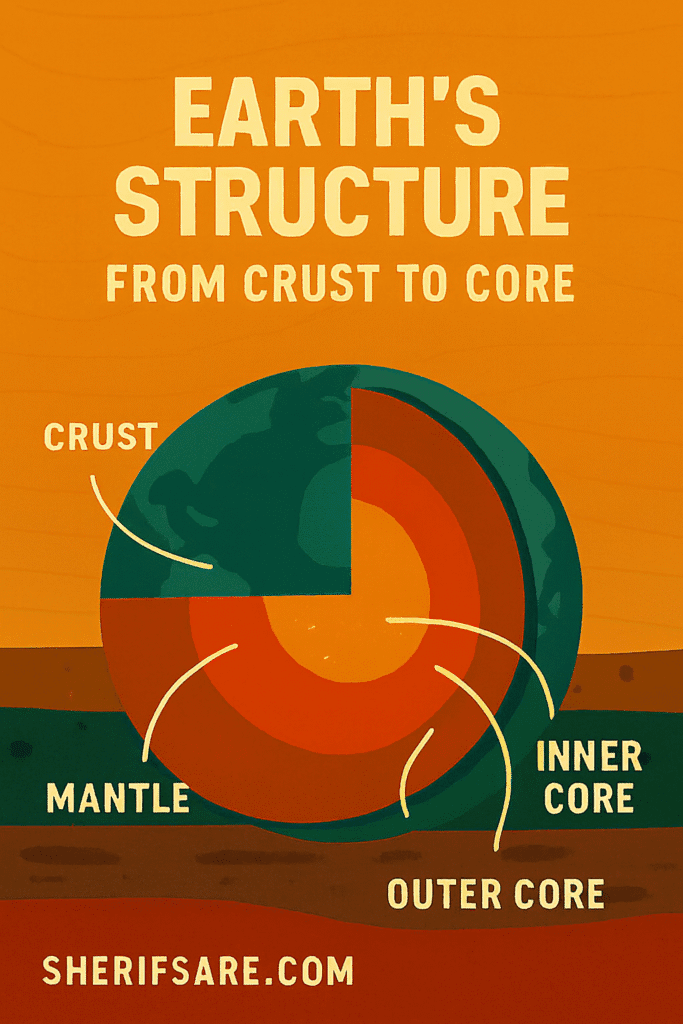
The Four Main Layers
| Layer | Depth Range | Composition | Key Features |
|---|---|---|---|
| Crust | 0–70 km | Solid rock (granite, basalt) | Earth’s surface; where we live |
| Mantle | 70–2,900 km | Silicate minerals (peridotite) | Semi-solid; drives plate movement |
| Outer Core | 2,900–5,150 km | Liquid iron and nickel | Generates Earth’s magnetic field |
| Inner Core | 5,150–6,371 km | Solid iron and nickel | Extremely hot and dense |
Continental vs Oceanic Crust
| Type | Thickness | Density | Composition |
|---|---|---|---|
| Continental | ~35 km | Less dense | Granite-rich |
| Oceanic | ~7 km | More dense | Basalt-rich |
How Heat Drives Movement
- Heat from the core causes convection currents in the mantle.
- These currents push tectonic plates, causing earthquakes, mountain building, and volcanic activity.
What’s Next
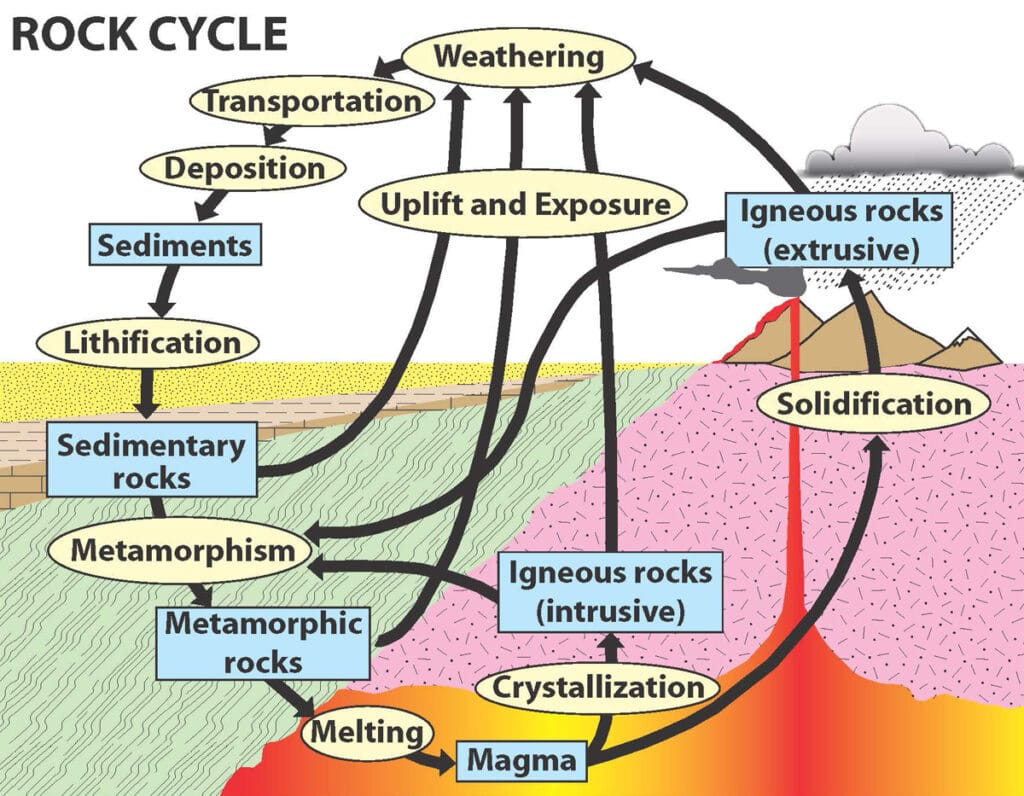
In the next post, we’ll explore rocks and the rock cycle — how Earth’s materials transform over time.